Introducing Bectran Intelligence Lab — AI tools for credit, risk, and collections.
Explore the toolkit →%20copy%201.svg)

Integrations

Lien Management
Connect your lien providers directly to your credit and collections process.





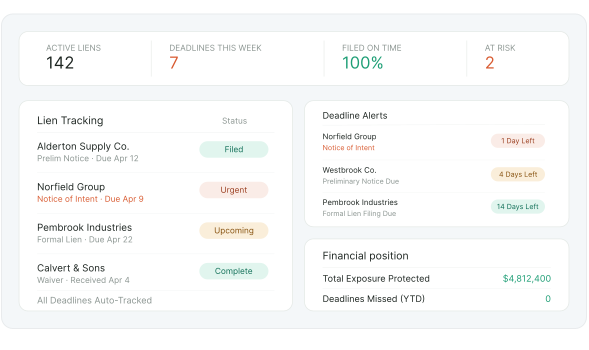
Every notice filed, every deadline tracked, across every job.
State-Specific Rules
Evaluate each job against state lien laws, with the correct notice types and filing windows identified automatically.

Two-Way Sync
Lien status, delivery confirmations, waivers, and filing updates sync back to Bectran in real time.


Job Data Submission
Customer details, job information, contract terms, and filing dates transmit directly to your lien provider.
Deadline Tracking
Upcoming notice and filing deadlines trigger alerts and workflows before statutory windows close.
In most states, missing the preliminary notice deadline eliminates the right to file a lien entirely. Bectran automates notice and filing workflows, ensuring the right documents go out on every job from day one and preserving lien rights from first delivery through final payment.
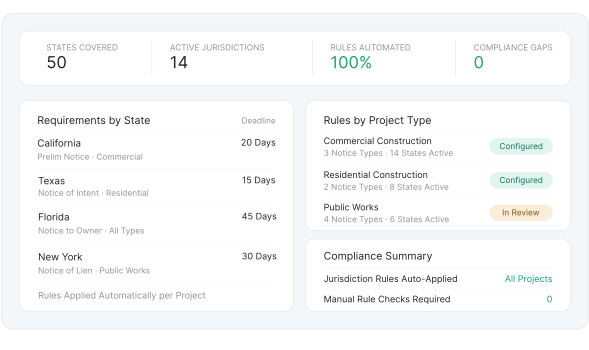
Lien laws vary by state, project type, and party tier. Bectran auto-matches each job to the applicable state requirements, sending the right notices at the right time without your team having to track the rules manually.
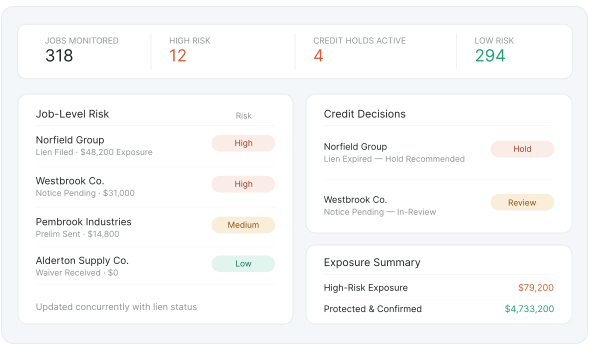
A large job with no preliminary notice filed won't register as a credit risk until the filing window has already closed. Bectran gives credit and collections teams a real-time view of lien status at the job level, showing which projects are protected, which have deadlines approaching, and which are exposed — before it's too late to act.
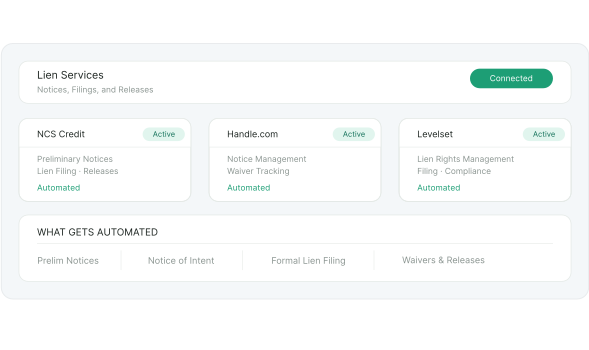
Connect directly with NCS Credit, Handle, or Levelset. Job data is submitted from Bectran to your provider of choice, with lien status and filing updates returned automatically, without redundant logins or manual data transfer between systems.
As project volume grows, so does the number of notices, deadlines, and state requirements to manage. Adding jobs doesn't add headcount, and operating across more states doesn't require more manual tracking.
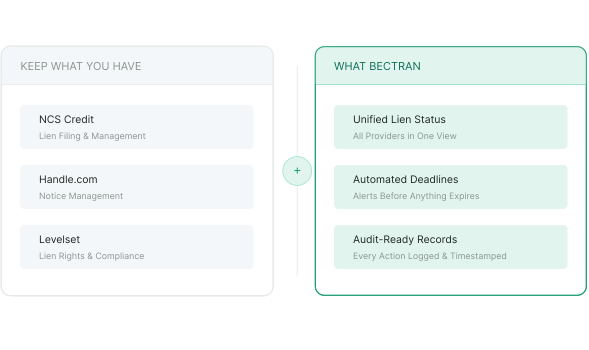
Tracking lien deadlines manually across hundreds of active jobs in multiple states isn't sustainable. State-specific rules change, project timelines shift, and the volume of required notices across a large portfolio creates a compliance burden that spreadsheets can't handle. When lien management is embedded in the credit workflow, deadlines track automatically and the right notices go out without coordination overhead.

Tracking lien deadlines manually across hundreds of active jobs in multiple states isn't sustainable. State-specific rules change, project timelines shift, and the volume of required notices across a large portfolio creates a compliance burden that spreadsheets can't handle. When lien management is embedded in the credit workflow, deadlines track automatically and the right notices go out without coordination overhead.
Tracking lien deadlines manually across hundreds of active jobs in multiple states isn't sustainable. State-specific rules change, project timelines shift, and the volume of required notices across a large portfolio creates a compliance burden that spreadsheets can't handle. When lien management is embedded in the credit workflow, deadlines track automatically and the right notices go out without coordination overhead.
Tracking lien deadlines manually across hundreds of active jobs in multiple states isn't sustainable. State-specific rules change, project timelines shift, and the volume of required notices across a large portfolio creates a compliance burden that spreadsheets can't handle. When lien management is embedded in the credit workflow, deadlines track automatically and the right notices go out without coordination overhead.
Tracking lien deadlines manually across hundreds of active jobs in multiple states isn't sustainable. State-specific rules change, project timelines shift, and the volume of required notices across a large portfolio creates a compliance burden that spreadsheets can't handle. When lien management is embedded in the credit workflow, deadlines track automatically and the right notices go out without coordination overhead.
Tracking lien deadlines manually across hundreds of active jobs in multiple states isn't sustainable. State-specific rules change, project timelines shift, and the volume of required notices across a large portfolio creates a compliance burden that spreadsheets can't handle. When lien management is embedded in the credit workflow, deadlines track automatically and the right notices go out without coordination overhead.
A national building materials supplier that manually tracked notice deadlines across multiple states was seeing missed filings result in disputed payments and write-offs. After integrating lien tracking through Bectran, deadlines sync automatically, and the correct notices are initiated before every statutory window. The team hasn't missed a filing deadline since.


A regional distributor supplying commercial construction projects had inconsistent practices for preliminary notice, with some jobs properly noticed and others missed, depending on who was managing the account. After connecting Bectran to their lien provider, preliminary notices are automatically initiated for every new job based on state-specific rules. Every job is noticed correctly from the start.