Introducing Bectran Intelligence Lab — AI tools for credit, risk, and collections.
Explore the toolkit →%20copy%201.svg)

Integrations

UCC Management
Centralized filing, automated tracking, zero compliance gaps.








Every filing triggered, tracked, and renewed automatically.
Data Accuracy
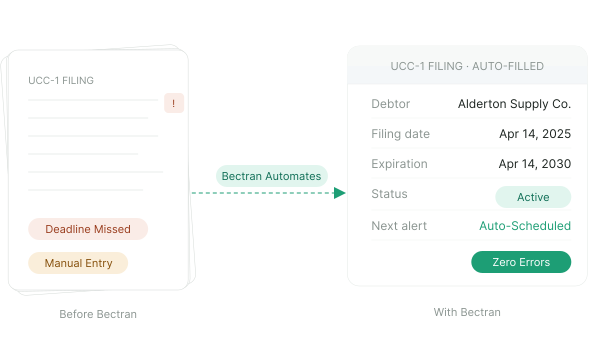
Filing data pulls from verified customer records, reducing name errors that can render a lien unperfectable.

Provider Integration
Filings transmit directly to your provider, with confirmations and status updates returned automatically.


Filing Triggers
New onboards, limit increases, and contract renewals auto-generate and transmit the appropriate UCC-1.
Lifecycle Tracking
Expiration dates, continuation windows, and release requirements update across your portfolio.
A growing credit portfolio means more filings, more continuation windows, and more terminations to track. Forms pre-populate from customer records, five-year renewal cycles trigger automatically, and account statuses update as filings move through their lifecycle.
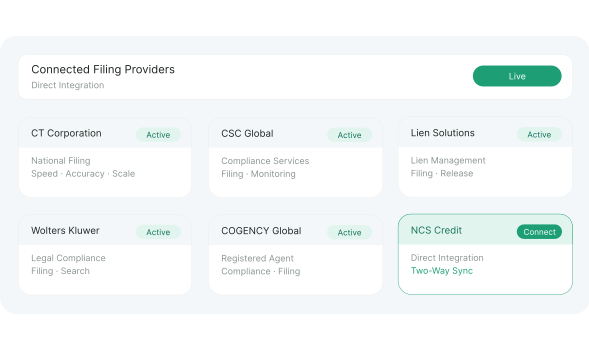
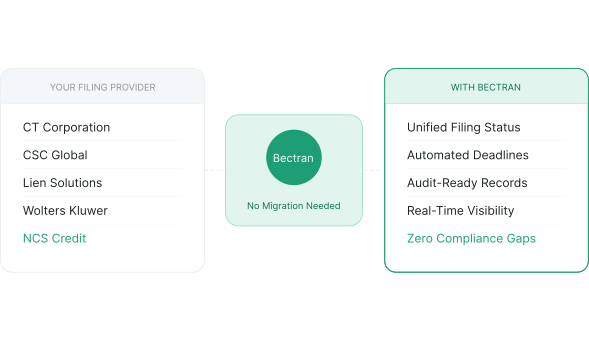
Keep the filing partner you already trust. Bectran connects directly with your UCC provider, transmitting filings and receiving status updates without redundant logins or manual data re-entry.
In a priority dispute or bankruptcy proceeding, documentation of when a lien was filed and that it was continuously perfected is what determines your position. Every filing, continuation, and amendment is logged with a timestamp tied to the customer record, giving legal a complete history without reconstructing it from emails.

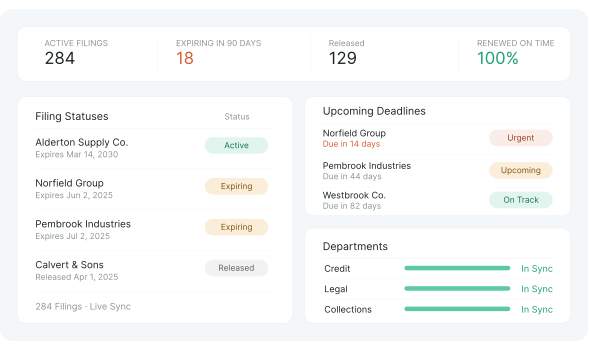
Collateral coverage, lien status, and upcoming continuation windows are visible to credit and legal from the same record. Credit decisions account for what's actually secured, and legal has the account data it needs before a renewal deadline approaches.
As your credit portfolio grows, so does the number of active filings, continuation deadlines, and terminations to manage. Adding accounts doesn't add headcount, and filing volume doesn't create manual process overhead.
A lapsed UCC filing doesn't announce itself. It surfaces in a bankruptcy proceeding or a write-off on an account your team believed was secured. Most failures are the result of a five-year renewal cycle managed manually across hundreds of accounts, where continuation windows close quietly and there's no fixing it after the fact.

A lapsed UCC filing doesn't announce itself. It surfaces in a bankruptcy proceeding or a write-off on an account your team believed was secured. Most failures are the result of a five-year renewal cycle managed manually across hundreds of accounts, where continuation windows close quietly and there's no fixing it after the fact.
A lapsed UCC filing doesn't announce itself. It surfaces in a bankruptcy proceeding or a write-off on an account your team believed was secured. Most failures are the result of a five-year renewal cycle managed manually across hundreds of accounts, where continuation windows close quietly and there's no fixing it after the fact.
A lapsed UCC filing doesn't announce itself. It surfaces in a bankruptcy proceeding or a write-off on an account your team believed was secured. Most failures are the result of a five-year renewal cycle managed manually across hundreds of accounts, where continuation windows close quietly and there's no fixing it after the fact.
A lapsed UCC filing doesn't announce itself. It surfaces in a bankruptcy proceeding or a write-off on an account your team believed was secured. Most failures are the result of a five-year renewal cycle managed manually across hundreds of accounts, where continuation windows close quietly and there's no fixing it after the fact.
A lapsed UCC filing doesn't announce itself. It surfaces in a bankruptcy proceeding or a write-off on an account your team believed was secured. Most failures are the result of a five-year renewal cycle managed manually across hundreds of accounts, where continuation windows close quietly and there's no fixing it after the fact.
A regional distributor tracking UCC expiration dates manually across hundreds of accounts was seeing missed renewals whenever credit terms changed mid-cycle. After integrating filing management into its credit platform, continuation workflows trigger automatically based on preset rules. The team eliminated missed renewal windows entirely.


An industrial supplier filing UCC-1s across a growing portfolio was dealing with data entry errors — mismatched entity names, outdated addresses — that required amendments and created gaps in secured positions. After connecting to Bectran, form data populates directly from verified customer records. Processing time dropped 60% and legal stopped correcting submissions after the fact.