How to Optimize Your Credit Application Form for Oil & Energy Clients

Bectran logo for blog posts
Janine Aquino

Bectran Product Team

I

October 1, 2026

5 minutes to read

An effective credit application form is the first line of defense for fuel distributors managing trade credit risk. The document collects financial and business information. In the oil and energy sector, it must also capture specific tax, legal, and operational details to prevent delays and mitigate bad debt.

What documents belong in a fuel distributor's credit packet?

A comprehensive credit packet for a fuel distributor extends beyond a simple application form. The collection includes the core credit application, a W-9 for U.S. entities or a W-8 for non-U.S. customers, and often a personal guaranty. Smaller dealers or new accounts often require a personal guaranty.

‍

Sales tax exemption certificates are important. Fuel products often have complex tax rules that vary by state and use case. Without these, a distributor risks incorrect billing and potential audit assessments. Trade and bank references provide insight into a customer's payment history and financial standing. Many distributors prefer references from other oil-related businesses.

‍

Collecting these documents individually, often through faxes or separate emails, creates bottlenecks in customer onboarding. Getting every required document submitted completely and accurately from the outset avoids the back-and-forth that delays first deliveries and inflates administrative costs.

How do you design a credit application form for oil & energy?

Designing an effective credit application form for the oil and energy sector requires careful attention to detail and industry-specific needs. The form must clearly capture the legal name of the business, its physical and mailing addresses, years in operation, and legal structure (e.g., individual, partnership, corporation). This foundational information establishes the applicant's identity and legal standing.

‍

The form should include fields for the Federal Employer Identification Number (FEIN) or Social Security Number (SSN) for proper tax reporting and identification. A typical comprehensive credit application form includes over 40 fields across various categories. This ensures all necessary information is captured. The form must also explicitly request the desired credit limit and include a clear authorization statement. An authorization statement allows the grantor to obtain credit information from listed references and banks. Some distributors title their form an "Account Application" rather than "Credit Application" to broaden its perceived scope, but the underlying data collection remains the same.

‍

Conditional logic within the form can make the process easier. It presents specific fields or document requirements based on the applicant's country or business type. For example, a non-U.S. entity might automatically be prompted for a W-8 form, while a U.S. entity receives a W-9. Automatic prompting makes fields relevant and reduces unnecessary entries for the applicant.

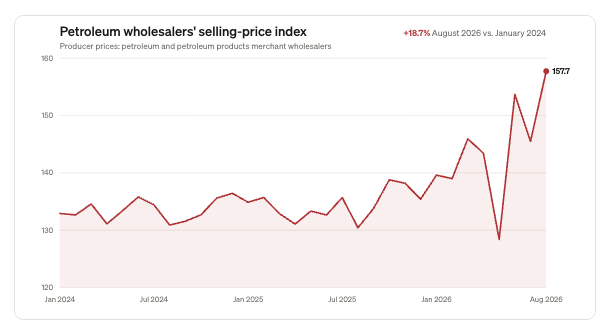
Producer prices: petroleum and petroleum products merchant wholesalers, PPI industry, index, January 2024–August 2026. August 2026: 157.7, +20.9% vs. August 2025. Source: U.S. Bureau of Labor Statistics, series PCU424700424700. View the series at BLS

What information do you need for effective risk assessment?

Beyond basic identification, a credit application form gathers data for a thorough risk assessment. Trade references, particularly from other fuel or trucking companies, offer direct insight into an applicant's payment behavior within the industry. Bank references, while sometimes challenging to obtain due to privacy concerns in regions like Canada, still provide valuable financial context.

‍

For businesses operating in specific segments like oilfield services, the application might need to capture details relevant to job sheets or project-based credit. Payment terms are tied to project completion rather than standard invoicing cycles. The inclusion of a personal guaranty section is important for mitigating risk with smaller businesses or those with limited operating history. A personal guaranty section transfers some liability to the owner.

‍

The form should inquire about any history of bankruptcy or outstanding liens and judgments. These are clear indicators of past financial distress. Collecting this comprehensive set of information allows credit managers to build a complete risk profile. This moves beyond simple credit scores to understand the operational and financial context of the applicant.

How can you prevent fraud and incomplete submissions?

Incomplete credit applications are a major bottleneck. They lead to frustrating back-and-forth communication and delayed account setups. To combat this, an optimized online credit application form should enforce mandatory fields for documents like W-9s, sales tax forms, and personal guaranties. If these are not attached or completed, the application cannot be submitted. Preventing incomplete submissions eliminates the need for manual follow-up.

‍

Fraud prevention is another aspect. Modern credit applications can integrate tools to validate applicant data in real-time. Validations include verifying email domains, checking IP addresses against the company's stated location, and detecting the use of VPNs. Email domain verification, IP address checks, and VPN detection can be red flags for fraudulent activity. The validations identify suspicious applications before they consume credit team resources.

‍

Automating these checks and requiring complete submissions reduces the time spent chasing missing information and verifying legitimacy. Automation and complete submissions shift the focus from administrative tasks to actual credit decisioning. Only fully vetted applications proceed through the onboarding pipeline.

How does an online credit application streamline onboarding?

Transitioning from manual, paper-based or editable PDF forms to an online credit application system makes the customer onboarding process easier. Sales representatives can provide applicants with a direct URL. Customers complete the application digitally at their convenience. Digital completion eliminates the need for printing, scanning, or faxing, which are common sources of delay and error.

‍

Once submitted, the data from an online application can be automatically fed into internal workflows. The system triggers notifications to the credit team and facilitates faster review. For organizations using an enterprise resource planning (ERP) system, the approved application data can be integrated via API. API integration automates customer account setup and reduces manual data entry errors. According to HighRadius, 80–90% of credit evaluations do not require manual review when automated.

‍

An intuitive user interface for the online application also improves the customer experience. It makes the process smoother and more professional. Reducing the administrative burden and accelerating the time from application to first delivery directly supports business growth and improves operational efficiency for fuel distributors.

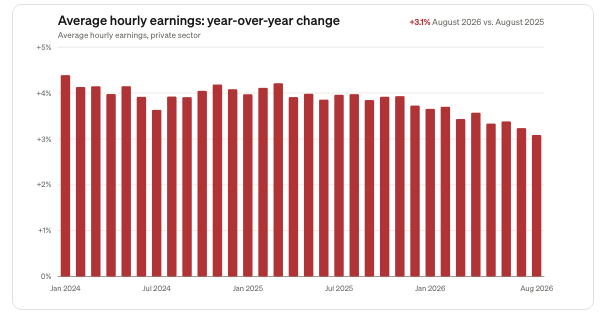
Average hourly earnings, private sector, year-over-year change by month, January 2024–August 2026. August 2026: +3.1% vs. August 2025. Source: U.S. Bureau of Labor Statistics, series CES0500000003. View the series at BLS

Streamline your fuel customer onboarding and mitigate risk

Bectran's credit management platform includes an online credit application with a customer portal and automated document collection. The platform's features reduce manual effort and speed up approvals. The platform provides multi-source bureau data aggregation and fraud prevention tools. Your credit team has all the necessary information to make informed decisions. Informed decisions lead to faster customer onboarding and stronger protection against bad debt. This is general information, not legal or tax advice. Walk through your own credit application workflow with our team and identify opportunities for automation and risk reduction.

Frequently asked questions

What is the primary purpose of a credit application form in fuel distribution?

The primary purpose is to collect comprehensive financial and business information from potential customers. Fuel distributors use this data to assess creditworthiness, manage risk, and establish appropriate trade credit terms before delivering high-value, commodity-based products like fuel or lubricants.

What key documents should accompany a fuel credit application?

Beyond the application itself, essential documents include a W-9 or W-8 tax form, a personal guaranty for certain business structures, and sales tax exemption certificates. Trade and bank references allow credit teams to verify payment history and financial capacity.

How can an online credit application improve efficiency?

Online applications streamline the process by enabling digital submission, enforcing mandatory fields, and reducing manual data entry, and they minimize back-and-forth communication, accelerate review times, and allow for faster customer onboarding compared to traditional paper forms.

How does Bectran enhance the credit application process for fuel distributors?

Bectran's credit management platform provides an online credit application with a customer portal for easy document collection. It automates the validation of required fields, integrates with tax forms like W-8/W-9, and supports country-specific logic, ensuring complete and compliant submissions from the outset.

Can Bectran's credit application system integrate with existing ERPs?

Yes, Bectran offers bi-directional ERP integration with enterprise resource planning systems. This allows for automated transfer of approved customer data from the credit application directly into your ERP for automated account setup, eliminating manual data entry and reducing errors.

October 1, 2026

Related Blogs