How to Manage Trade Credit Use and Payment Risks

Bectran logo for blog posts

Bectran Product Team

I

November 6, 2026

6 minutes to read

Trade credit use is rising across North America, but payment risks threaten business liquidity. Businesses must balance sales growth with cash flow protection by implementing clear credit policies, continuous risk assessment, and efficient collections. This approach helps maintain liquidity and reduces bad debt exposure.

Why is trade credit use increasing?

North American businesses increasingly rely on trade credit to attract and retain customers. For example, firms in North America conduct 43% of their B2B sales on credit terms. The strategy supports sales growth but also increases exposure to payment risks. Companies in manufacturing and trade sectors have particularly increased their use of B2B trade credit in recent months.

‍

Increased use of B2B trade credit reflects a need for flexibility, especially in competitive and fragmented markets. Businesses extend credit to maintain relationships and support customers facing liquidity constraints. For instance, 73% of businesses in Türkiye increased trade credit offerings to protect market share. However, more working capital is then tied up in accounts receivable, directly impacting a supplier's own cash flow and operational flexibility.

‍

Credit teams must support sales without compromising the company's liquidity. They manage the balance between offering competitive terms and protecting the business from potential defaults. Managing this balance requires a clear understanding of market dynamics and customer behavior. For example, a regional fuel distributor might see increased exposure if fuel prices rise. The same dollar credit line then covers fewer gallons. Fewer gallons increase the distributor's risk and potential for loss.

‍

A proactive approach to credit management is necessary. Credit teams assess the financial health of their customers and the broader economic environment. They adapt credit policies to changing market conditions. Companies mitigate risks with these policies. Companies prevent risks from impacting cash flow. Businesses can continue to grow responsibly.

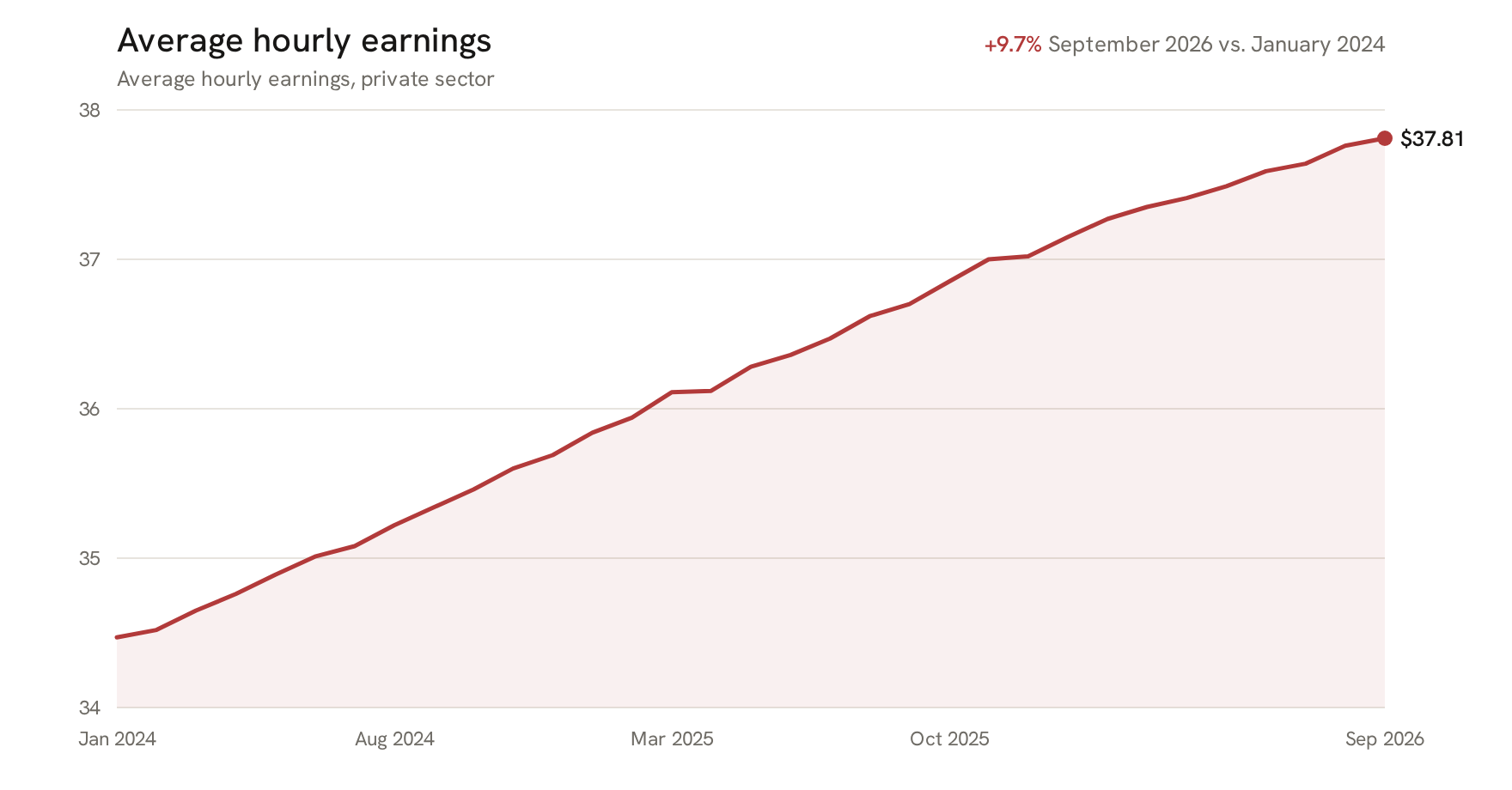
Average hourly earnings

Average hourly earnings, private sector, Dollars per hour, seasonally adjusted, January 2024–September 2026. September 2026: $37.81, +3.0% vs. September 2025. Source: U.S. Bureau of Labor Statistics, series CES0500000003. View the series at BLS

How do you assess new customer credit risk?

Manual credit application processes become a significant burden as businesses grow. Credit teams spend too much time chasing references and gathering data. Delays in decisions can lead to missed sales opportunities. For example, a credit manager might receive a request for a $25,000 credit line. They need to quickly gather bank and trade references, pull bureau reports, and review financial statements.

‍

Manual credit reviews can take 10 days or more, especially when references are slow to respond. These delays frustrate both sales teams and potential customers, and the pressure to move quickly can lead to poor credit decisions and, eventually, bad debt.

‍

Automating the credit application process speeds up data collection and validation. A customer portal allows applicants to submit information and documents directly. Documents include tax exemption certificates and financial statements. Bectran's credit application system streamlines this process. Manual effort falls. The applicant experience improves.

‍

Integrating with credit bureaus provides instant data to help assess customer credit risk. Bectran's multi-source analysis aggregates this data for better decisions. You can set up rules for instant decisions, for example, approving credit requests under $10,000 if bureau limits are sufficient. Setting up rules for instant decisions reduces manual review for low-risk applications. The rules allow your team to focus on more complex cases. Your team uses resources more effectively.

How can you monitor existing customer exposure?

Continuous monitoring of customer payment behavior is essential to manage trade credit risk. A customer's financial health can change quickly. Financial health changes affect the customer's ability to pay. For example, a customer paying on Net 30 terms might suddenly start paying at 45 days. Paying at 45 days signals potential distress. The credit team must give immediate attention to this distress.

‍

Credit teams must track payment trends, outstanding balances, and any changes in credit bureau scores. Early warning signs of distress become visible through this tracking. Regular reviews prevent exposure from growing beyond acceptable limits.

‍

Consider a regional fuel distributor whose customer typically buys $100,000 of fuel monthly. If fuel prices rise, the same dollar credit line covers fewer gallons. The credit team must reprice the exposure in gallons, not just dollars, to reflect the true risk. Dynamic adjustments to credit limits are necessary.

‍

Automated systems can flag accounts that exceed predefined exposure ratios or show deteriorating payment patterns. Credit managers adjust credit limits or terms proactively. For example, if a customer's payment behavior worsens, the system can trigger a review of their credit limit.

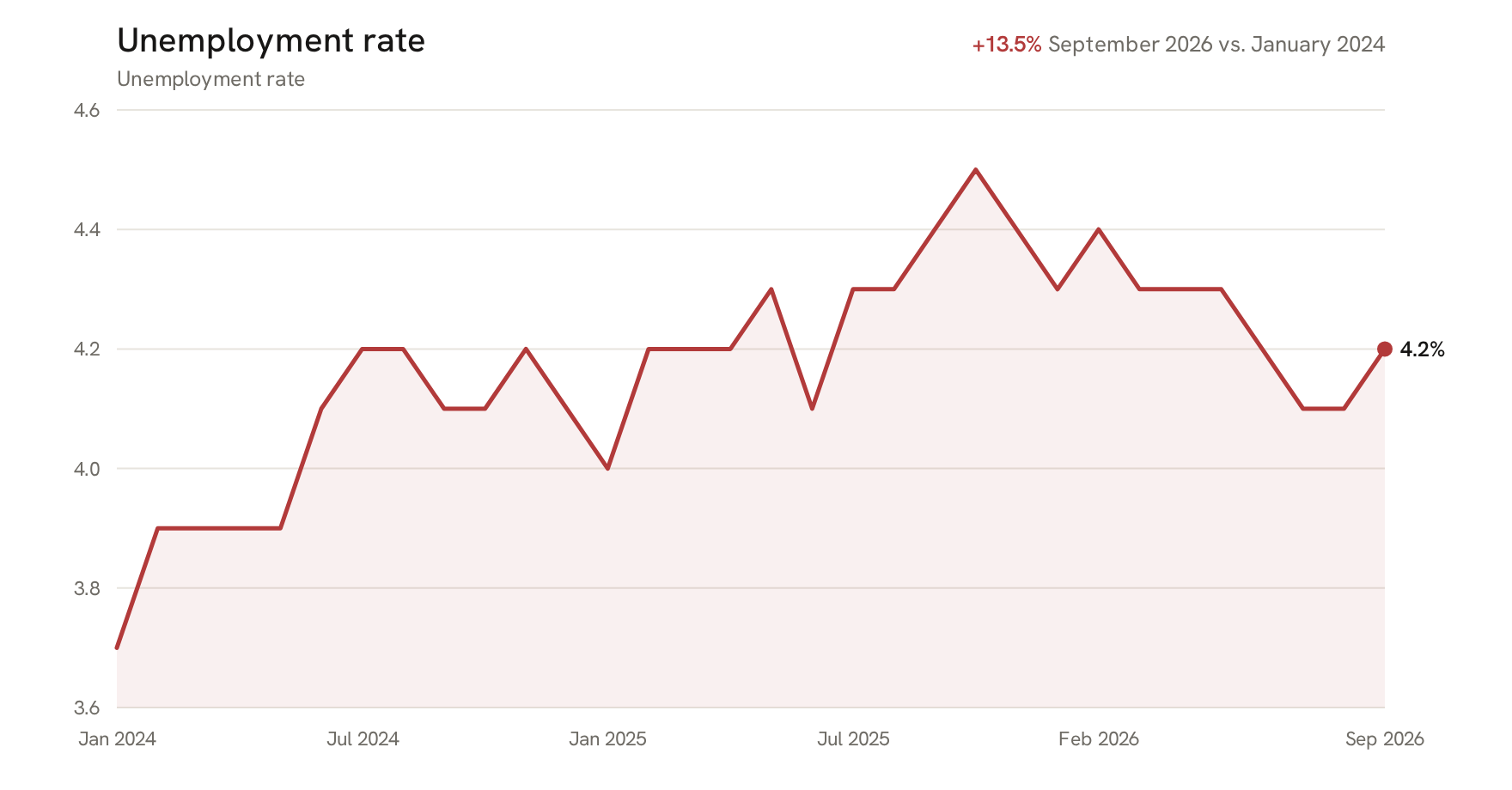
Unemployment rate

Unemployment rate, Percent, seasonally adjusted, January 2024–September 2026. September 2026: 4.2%, down from 4.4% in September 2025. Source: U.S. Bureau of Labor Statistics, series LNS14000000. View the series at BLS

What strategies reduce payment delays and bad debt?

Payment delays and bad debts are widespread risks in B2B trade. The issues strain liquidity and force suppliers to borrow more to cover cash flow gaps. For example, 40% of B2B invoices are paid late in some markets, and bad debts can impact 10% of B2B invoices. The sharp rise reflects growing financial pressure on customers and demands robust mitigation.

‍

Clear dunning strategies and timely follow-ups are vital to mitigate the impacts of growing financial pressure on customers. Segmenting customers by risk helps prioritize collection efforts. For instance, high-risk customers might receive more frequent or personalized communications, while low-risk accounts can be managed with automated reminders.

‍

Implement escalation workflows for overdue invoices. For example, send an automated reminder at 5 days past due, a phone call at 15 days, and escalate to a manager at 30 days. The workflow ensures consistent action and prevents accounts from aging unnecessarily. Structured, professional communication helps preserve customer relationships.

‍

Using tools like Dunning Doctor can help craft effective collection emails. Effective collection emails improve response rates and maintain customer relationships. For critical accounts, consider involving third-party collection agencies when internal efforts fail. Involving third-party collection agencies reduces the average time to collect payments and minimizes bad debt write-offs.

How can technology improve trade credit management?

Technology transforms manual credit processes into automated workflows. Automated workflows move the credit team's focus from data entry. For example, a company processing 1,000 credit applications monthly can reduce processing time by 90%. The efficiency gain allows teams to handle higher volumes without increasing headcount.

‍

Automated credit decisioning uses predefined rules and aggregated bureau data to approve or reject applications quickly. The process ensures consistent decisions and reduces human error. It also frees up credit analysts for complex cases, such as reviewing large credit requests or investigating unusual payment patterns, adding strategic value.

‍

A centralized document vault stores all credit-related documents securely. Documents include tax certificates, financial statements, and legal agreements. Automated reminders for expiring documents prevent compliance gaps. The vault gives your team access to current and valid customer information. The system supports audit readiness.

‍

Integrating credit and accounts receivable functions provides a holistic view of customer risk.

Strengthen Your Trade Credit Decisions

Bectran's credit and receivables platform includes online credit application with customer portals for document collection, automated credit scoring and decisioning, multi-source bureau data aggregation, and sales-tax certificate tracking and validation to ensure compliance. This is general information, not legal or tax advice. Walk through your own credit exposure with our team and see where the gaps sit before a buyer's position changes.

Frequently asked questions

What is trade credit use?

Trade credit use refers to a supplier extending payment terms to a business customer for goods or services. The customer receives products immediately but pays later, typically within 30 to 90 days. This helps customers manage their cash flow and allows suppliers to increase sales volume.

Why is managing trade credit risk important?

Managing trade credit risk is important because it directly impacts a company's liquidity and profitability. Unpaid invoices or extended payment delays tie up working capital and can lead to bad debt losses.

What are common challenges in trade credit management?

Common challenges include slow manual processes for credit applications, difficulty in obtaining reliable customer financial data, and inconsistent credit decisioning. Monitoring ongoing customer risk and effectively collecting overdue payments also present significant hurdles for many businesses.

How does Bectran help manage trade credit use?

Bectran's credit management platform automates the entire credit application and decisioning process. It aggregates multi-source bureau data, validates applicant information, and applies automated scoring. This allows credit teams to make faster, data-driven decisions and set appropriate credit limits.

Does Bectran integrate with credit bureaus for risk assessment?

Yes, Bectran integrates with over 50 credit bureaus, including Dun & Bradstreet and Experian. This multi-source analysis capability pulls comprehensive data directly into the system. It helps credit teams build accurate risk profiles and supports automated credit decisioning workflows.

November 6, 2026

Related Blogs