How to Optimize Accounts Receivable Performance in Construction

Bectran logo for blog posts
Janine Aquino

Bectran Product Team

I

November 10, 2026

7 minutes to read

Construction businesses often wait over three months to collect invoice payments. The three-month waiting period is more than double the recommended 45-day threshold for days sales outstanding (DSO). Project-based billing, retainage, and frequent change orders complicate payment collection.

Why is accounts receivable complex in construction?

Project-based billing, retainage, and frequent change orders complicate payment collection. Construction companies wait over three months to collect invoice payments. The three-month waiting period is more than double the recommended 45-day threshold for days sales outstanding (DSO).

‍

Manual processes complicate payment collection. Many businesses still use paper forms, faxes, and emails for credit applications and document collection. This manual approach slows customer onboarding. It increases the risk of errors. Backlogs in application processing result. Some firms report applications from June still pending by August. Pending applications delay new project starts. Finance teams spend time on administrative tasks. They cannot focus on financial planning or analysis.

‍

Material costs also affect receivables. A credit limit set in January may cover fewer materials by July if prices increase by 15%. Material price volatility inflates the receivable independent of volume. Exposure increases even when customer behavior remains consistent. Managing these risks requires a clear understanding of project-specific terms and real-time financial data. Real-time financial data helps adjust limits as market conditions change.

‍

Unapplied cash also presents a problem. Payments often arrive without clear remittance details. This makes it difficult to match funds to specific invoices or progress bills. Delays in cash application result. The unapplied cash balance inflates. This obscures the true financial position of the business. Resolving these issues is important for accurate financial reporting and effective working capital utilization.

How can you streamline credit decisions for new accounts?

Streamlining credit decisions for new general contractor contractors and subcontractor contractors starts with an efficient application process. Many construction suppliers still use paper applications or basic PDF forms. Paper applications or basic PDF forms often arrive incomplete. An online credit application system guides applicants through required fields and collects all necessary documents, like lien waivers and W-9s, upfront. The reduction in back-and-forth communication prevents delays in account setup.

‍

Automated decision models accelerate approvals for low-risk accounts. Decision models use predefined rules based on organizational type, years in business, and requested credit limits. For example, requests under a certain threshold, like $50,000, can receive auto-approval. Auto-approval frees credit teams to focus on higher-risk applications. The use of auto-approval can lead to an increase in auto-approval rates. Some comparable clients see 25% auto-approval. The higher auto-approval rate improves turnaround times for new customers.

‍

Integrating credit bureau data directly into the application workflow provides a comprehensive risk view. A system can aggregate data from multiple bureaus. This gives finance leaders a complete picture of a general contractor contractor's financial health. This includes payment history and debt levels. Such integration makes consistent, data-driven decisions.

‍

Automating trade and bank reference checks also speeds the process. Manual follow-ups for references take days. Application backlogs result. A system automatically sends requests and escalates non-responsive applications. Delays decrease. Bank integrations require customer consent to access account data. They show account data to help assess new trade partners.

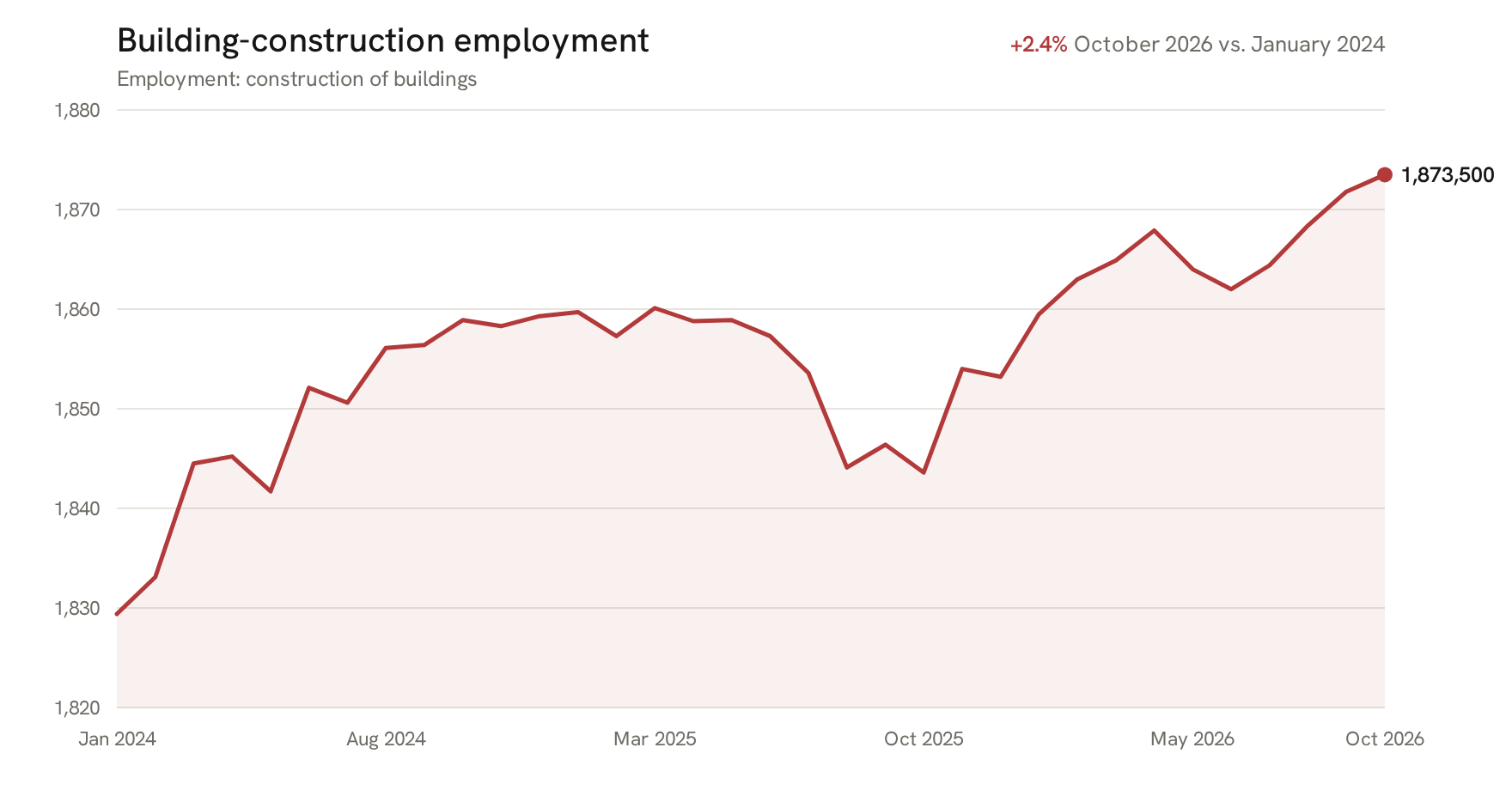
Building-construction employment

Employment: construction of buildings, Thousands of employees, seasonally adjusted, January 2024–October 2026. October 2026: 1,873,500, +1.6% vs. October 2025. Source: U.S. Bureau of Labor Statistics, series CES2023600001. View the series at BLS

How do you monitor ongoing credit risk and portfolio health?

Monitoring ongoing credit risk requires continuous visibility into your accounts receivable portfolio. Many construction businesses lack a centralized dashboard to track customer risk ratings and payment trends. A system that consumes your accounts receivable data provides a live risk rating for each customer. The rating updates daily or as new payment data arrives. Finance leaders see how a customer's risk profile changes over time.

‍

Regular credit reviews are important, especially for long-term projects. You can set up automated reviews to run quarterly, semi-annually, or annually for specific groups of accounts. Automated reviews re-pull bureau reports and re-check trade references. Credit limits stay appropriate for current risk levels.

‍

An effective system provides a clear breakdown of your portfolio by risk level. You can see how many accounts fall into high, medium, or low-risk categories. Segmentation helps prioritize collection efforts. Segmentation allocates resources more effectively. Dashboards also display total receivables, past-due accounts, and credit limit utilization.

‍

Alerts for changes in a customer's risk profile are important. If a customer's payment data trends poorly over 30, 60, or 90 days, the system flags the account for immediate review. Your team can intervene before a minor payment delay escalates into a major bad debt issue.

How can you manage construction-specific payment terms and disputes?

Construction payment terms differ from standard Net 30 arrangements. Progress billing, retainage, and specific Net 10 or Net 15 terms are common. Billing structures, frequent change orders, and back charges create unique dispute drivers. Unapproved change orders, disputes over material quantities, or payments tied to upstream funding all contribute to short pays and deductions.

‍

A clear, written credit policy is important for enforcing payment terms. Policy details include consequences for overdue balances and steps for initiating collection efforts. Without a formal policy, collection activities become inconsistent. Inconsistency leads to further delays and increased bad debt. The policy also addresses how to handle common construction-specific deductions.

‍

Automating the dispute resolution workflow helps address short pays. When a payment arrives with a deduction, the system routes the dispute to the appropriate team member for investigation. Dispute routing resolves issues like unapproved change orders or material quantity discrepancies quickly. Prompt resolution prevents disputes from lingering and impacting cash flow.

‍

Offering various payment methods also improves on-time payments. Options like credit cards, ACH payments, or digital payment portals make it easier for general contractors and subcontractors to pay. Providing a link to an online payment portal early and often reduces friction in the payment process. Customers settle invoices and progress bills faster.

How do you improve cash application for project-based payments?

Cash application in construction is complex due to varied payment types and remittance details. Payments often arrive against multiple progress bills or retainage releases, not simple invoice numbers. Complex payment arrivals require finance teams to manually match payments to remittance data. Remittance data often comes from diverse sources. They then apply cash in their ERP system. Manual matching consumes time and is prone to errors.

‍

Automated cash application systems reduce the time and errors of manual matching. Remittances arrive in any format. EDI 820 or bank lockbox files are examples of these formats. They use multi-pass matching logic to reconcile payments. They handle partial payments across multiple deliveries or projects. Handling partial payments reduces the need for manual intervention. The automation cuts down on the time spent on month-end close activities.

‍

Managing retainage settlement also benefits from automation. Retainage is a percentage of the payment held back until project completion. Its release often involves netting materials, labor, and fees. An automated system tracks retainage balances and reconciles them against final payments. Accurate settlement results. The system prevents unapplied cash from accumulating due to complex retainage releases.

‍

Reducing unapplied cash is a key outcome of improved cash application. When remittances lack detail, funds sit unapplied. Unapplied funds obscure the true state of receivables. An automated system identifies exceptions. It routes them to a queue for quick resolution. This minimizes the unapplied cash balance. This provides finance leaders with a clearer, real-time view of their working capital.

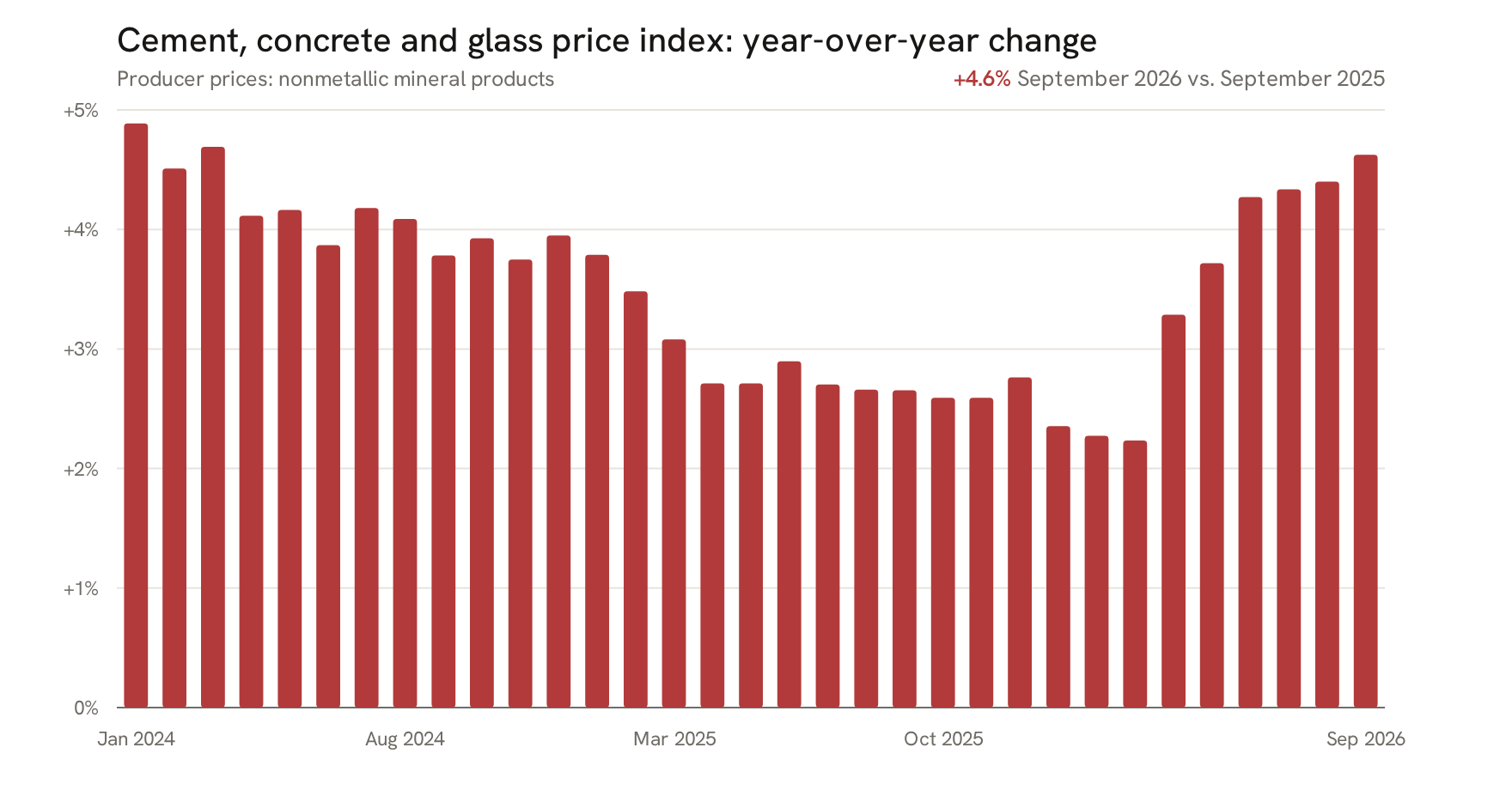
Cement, concrete and glass price index

Producer prices: nonmetallic mineral products, year-over-year change by month, January 2024–September 2026. September 2026: +4.6% vs. September 2025. Source: U.S. Bureau of Labor Statistics, series WPU13. View the series at BLS

Improve cash flow with automated receivables management

Bectran's credit and receivables platform includes online credit applications with customer portals, automated credit scoring and decisioning, multi-source bureau data aggregation, job sheets for project-based credit, and automated cash application for complex remittances. This is general information, not legal or tax advice. Bring your own accounts receivable process to our team and see how much faster you collect with automation.

Frequently asked questions

What are common accounts receivable challenges in construction?

Construction businesses often face payment delays due to complex progress billing, retainage, and change orders. Manual credit processes, incomplete applications, and difficulty matching payments to remittances also create backlogs and unapplied cash balances.

How can construction companies speed up credit approvals?

Construction companies can speed up credit approvals by using online credit applications that ensure complete submissions. Automated decision models quickly approve low-risk accounts. Integrating credit bureau data and automating trade and bank reference checks also reduces manual effort and accelerates the onboarding process for new general contractor contractors and subcontractor contractors.

What metrics should construction finance leaders monitor for AR?

Finance leaders should monitor Days Sales Outstanding (DSO) to track payment collection efficiency. They should also track the percentage of aging dollars past due, especially those over 90 days. Monitoring customer risk ratings and payment trends provides early warnings for potential bad debt. Portfolio health stays good.

How does Bectran improve accounts receivable in construction?

Bectran's platform streamlines construction accounts receivable by automating online credit applications and decisioning. It aggregates multi-source bureau data for comprehensive risk assessment and manages project-based credit with job sheets. The system also automates cash application, matching complex remittances to progress bills and retainage releases, reducing unapplied cash.

Can Bectran integrate with existing construction ERP systems?

Yes, Bectran offers bi-directional ERP integration with systems like SAP, Oracle, and NetSuite. Application data flows into the ERP for real-time risk monitoring. Payment data flows back to Bectran for cash application. The ERP's core functions remain in place.

November 10, 2026

Related Blogs