What Are Credit References and How Do You Check Them?

Bectran logo for blog posts
Janine Aquino

Bectran Product Team

I

November 18, 2026

6 minutes to read

Credit references are the bank and trade contacts a new customer lists on a credit application, and you call them to learn how the customer pays. A good reference reports the customer's balance, past due amount, and payment pattern, so you can set a first credit limit with evidence.

What are credit references on a B2B credit application?

A credit reference is a statement from a bank or a supplier that describes how a business pays its bills. The applicant lists the contacts. You contact them before you ship on terms. Bank references show how the customer handles cash, and trade references show how the customer pays suppliers.

‍

Many suppliers do not report payment histories to the business credit bureaus. A new customer can have a thin bureau file for that reason. A reference fills the gap with real payment experience from a company that already sells to the customer on terms.

‍

Ask the reference for facts: amounts, dates and days late. Do not ask for a rating. A rating gives you the reference's opinion, and your team needs numbers to form its own view. Forms that ask for the reference's own credit limit also get few answers, because that figure is the supplier's internally approved limit.

‍

Use references as one input, not the whole file. The applicant picks the contacts and can list a friendly one. Pair the answers with a bureau report and the customer's financial statements.

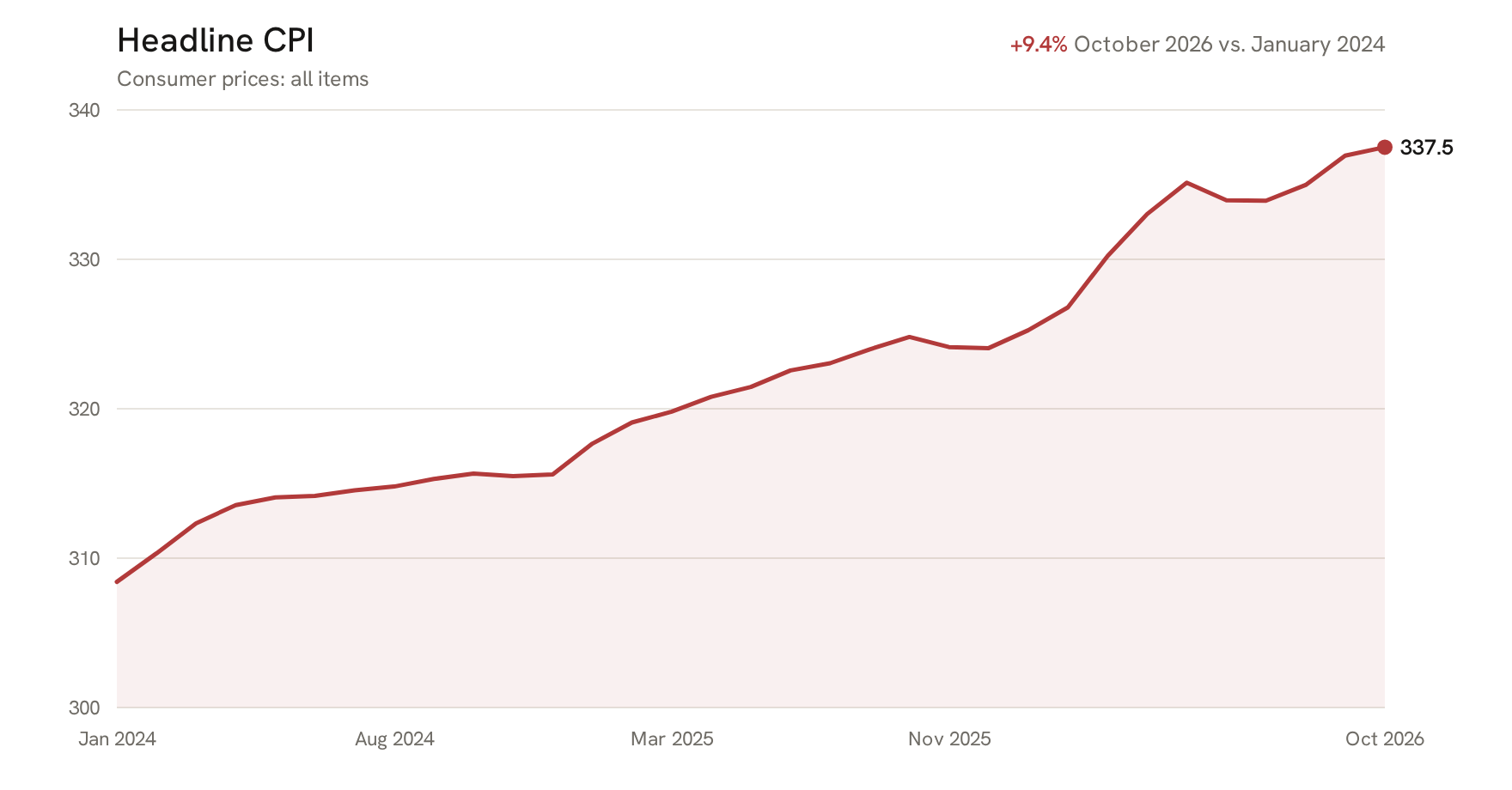
Headline CPI

Consumer prices: all items, CPI-U, index (1982-84=100), January 2024–October 2026. October 2026: 337.5. Source: U.S. Bureau of Labor Statistics, series CUUR0000SA0. View the series at BLS

Which questions should you ask a trade reference?

Ask each trade reference for seven facts, and ask for them in writing. Keep the form short.

‍

The seven facts are the date the data applies to, the manner of payment, the highest credit used in the past 12 months, the amount owed now, the amount past due, the selling terms, and the date of the last sale. Together they show how large the account is, how current it is, and whether the customer pays on time.

‍

Drop the fields you will not use. Highest credit from five years ago says little about the customer today, so ask for the past 12 months only. Add two yes or no questions: did the customer ever go to collections, and did any payment come back dishonored? Make payment experience a drop-down with fixed answers: pays within terms, takes discounts, pays 30 days slow, pays 60 days slow, pays 90 days or more slow. Fixed answers let you score every reply the same way.

‍

Send the request from the credit application. An online credit application can email each reference a link, and the reference answers on a web page instead of by phone. Set a two-business-day deadline and send one reminder.

What should you ask a bank reference?

A bank reference tells you how the customer handles cash, not how the customer pays suppliers. Ask for current facts only.

‍

Ask the bank for the account standing, the average balance over recent months, and whether the customer holds open bank credit with an unused balance. Skip questions about how the bank set up its own credit terms. Your team needs to know whether cash is there to pay a Net 30 invoice. Skip history from years ago too.

‍

Banks often decline to answer a supplier. The applicant then lists a bank, your team files the form, and nothing happens with it. Treat an unanswered bank reference as no evidence, not as good news.

‍

Ask the applicant to confirm the account through a bank login on the application instead. With consent, the applicant shares balances and cash flow. You see opening balances and averages without a wait for a branch. Some applicants hesitate to log in to a bank, so keep the traditional reference letter as the fallback. Expect uneven uptake, and do not hold an application for it.

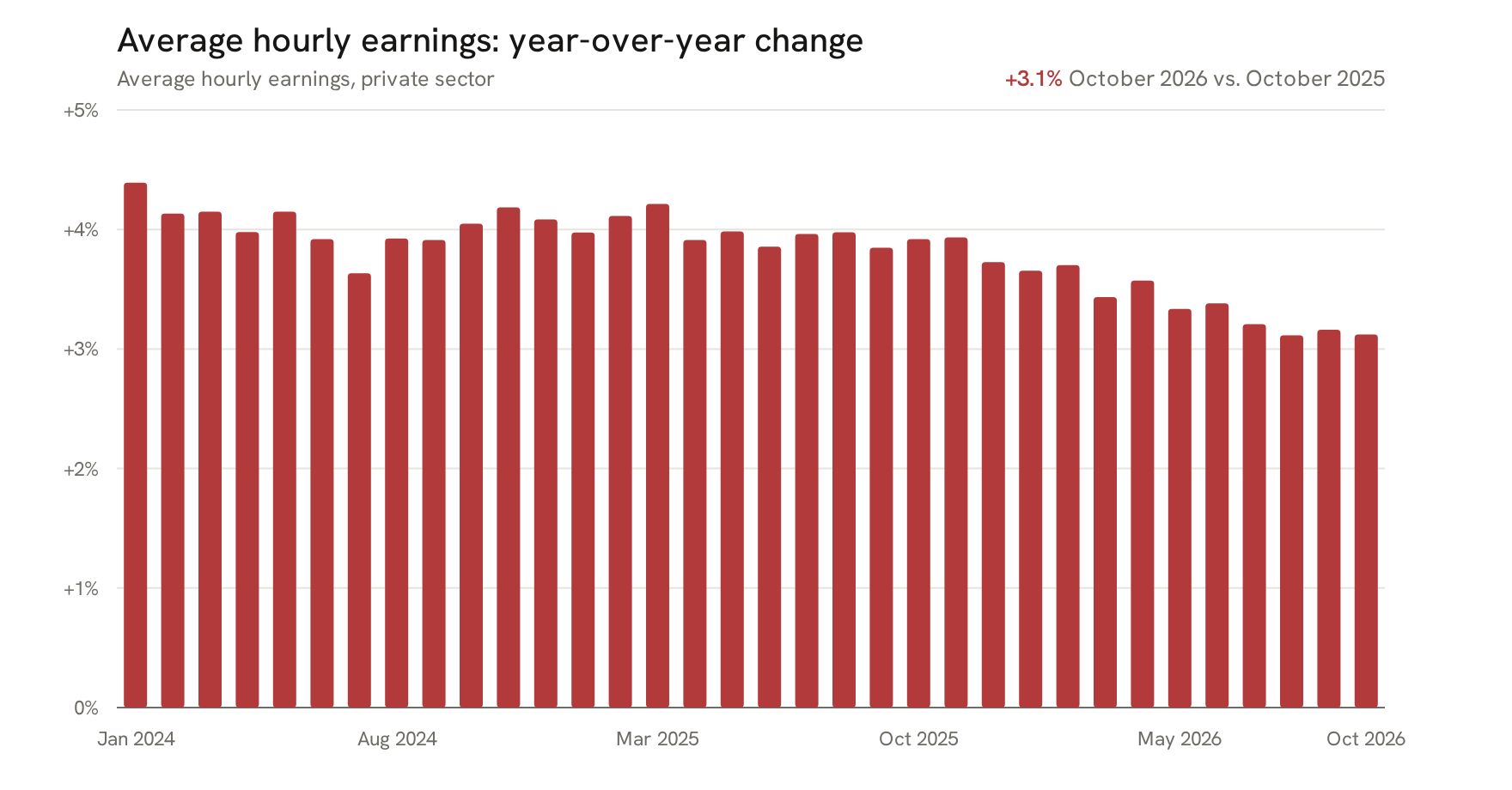
Average hourly earnings

Average hourly earnings, private sector, year-over-year change by month, January 2024–October 2026. October 2026: +3.1% vs. October 2025. Source: U.S. Bureau of Labor Statistics, series CES0500000003. View the series at BLS

How do you tell a good credit reference from a weak one?

A good reference comes from a supplier in the customer's own industry that sells on terms like yours. Judge the source before you read the answer.

‍

A utility makes a weak reference. The customer must pay the electric bill to keep the power on, so the payment record says little about how the customer treats optional suppliers. A same-industry supplier reflects payment practices close to what you will see.

‍

Apply the same exclusions a major bureau applies. Major bureaus reject manual references from related companies, banks, landlords or businesses that asked for anonymity. Reject the same sources in your own file. Check size too: for example, a supplier that extended only $2,000 tells you little about a $25,000 request.

‍

Check each reference against other data. Compare what the reference says with the bureau file and the payment trend. A reference that reports nothing past due while the bureau file shows slow payments needs a second call. If two sources disagree, trust the one with dates and amounts.

How do you turn reference answers into a credit limit?

Set the first credit limit from the highest credit that same-industry suppliers gave, then cut it by any past due amount. Write the number and the reason in the file.

‍

Here is a hypothetical example. A new customer asks for $25,000 on Net 30. Reference A, a same-industry supplier, reports a 12-month high credit of $18,000, $9,000 owed and nothing past due. Reference B reports a high credit of $12,000 and $3,000 past due by 60 days. Start at $18,000, subtract the $3,000, and set the limit at $15,000.

‍

Review the limit after 90 days of paid invoices. If the customer pays within Net 30 each time, raise the limit toward the $25,000 request. If a second approver who knows the industry sees something your file does not, record the change and the reason.

‍

Reference checks do not fit every case. A very small order may not justify a reference check, and a very large exposure needs financial statements and a bureau report on top. Automated credit decisioning can apply the same rule to every application, so two analysts reach the same limit from the same references.

Get credit references back faster and score them the same way

Bectran's credit and receivables platform includes an online credit application with a customer portal that collects bank and trade references. It emails each trade reference a link, so the reference answers on a web page. Your team sets the reference fields and weights, and bank-account matching checks the applicant's account. Multi-source bureau aggregation and automated scoring with approval routing apply one rule to every application. Your team gets references back sooner and sets limits from the same facts each time. Bring your reference form and limit rules to our team and see where the checks slow down.

Frequently asked questions

What is the difference between a bank reference and a trade reference?

A bank reference describes the customer's account standing, average balances and open bank credit. A trade reference describes how the customer pays a supplier: selling terms, highest credit, amount owed, amount past due and date of the last sale. Use both for a new account, because each answers a different risk question.

How many credit references should you ask for?

Ask for at least three trade references and one bank reference. The extra trade reference means one slow or silent reply does not stall the decision. Prefer suppliers in the customer's own industry, and drop any reference from a related company or a utility, because those replies say little about payment habits.

What do you do when a credit reference does not respond?

Send one reminder after two business days. If the reference still does not answer, decide on the evidence you have: the bureau report, the financial statements and the other references. Set a low starter limit, ship on terms, and review the limit after 90 days of paid invoices.

How does Bectran collect credit references?

Bectran's online credit application collects bank and trade references in one form. The platform emails each trade reference a link, and the reference answers on a web page. You choose which fields to keep and which to weight. Bank-account matching helps you confirm that the account belongs to the applicant.

Does Bectran integrate with credit bureaus and ERP systems?

Yes. Bectran aggregates data from several credit bureaus into one risk view that sits next to the references. Bectran also syncs both ways with ERP systems such as SAP, Oracle, NetSuite and Dynamics. Your ERP records the invoice, and Bectran manages the credit decision and the receivable afterwards.

November 18, 2026

Related Blogs